Abstract
Secondhand smoke (SHS) exposure remains a critical global health threat, causing an estimated 1.3 million deaths annually and classified by the World Health Organization (WHO) as a Group 1 carcinogen with no safe level of exposure. In Nigeria, SHS contributes substantially to both communicable and non-communicable diseases despite the National Tobacco Control Act (NTCA) of 2015, which incorporates key provisions of the WHO Framework Convention on Tobacco Control (FCTC); however, enforcement gaps and limited public awareness continue to undermine its effectiveness. This study assessed the prevalence of SHS exposure and examined associations between socio-demographic characteristics, knowledge of tobacco legislation, and perceived risks of SHS among 399 non-smoking adults recruited through systematic sampling in Ajah and Obalende motor parks in Eti-Osa LGA, Lagos State. Using a modified Global Adult Tobacco Survey (GATS) questionnaire, data were analyzed with IBM SPSS version 21, employing descriptive statistics, Chi-square tests, and multivariate logistic regression at a significance level of p ≤ 0.05. The prevalence of SHS exposure was 54.6%, notably higher among middle-aged men, individuals with lower educational attainment, and frequent users of motor parks. Although 69.8% of respondents demonstrated good perceived risk of SHS - reflecting awareness of its respiratory, cardiovascular, and carcinogenic harms - knowledge of the NTCA was poor (44.2%), indicating that understanding of health risks has not translated into awareness of legal protections or compliance with smoke-free regulations. These findings underscore the high burden of SHS exposure in outdoor transport settings, exceeding previously reported indoor rates, and highlight the urgent need for strengthened enforcement of smoke-free laws, improved public education on tobacco legislation, and targeted interventions within motor parks to reduce SHS exposure and protect public health.
Keywords
Secondhand Smoke, Tobacco Law, Risk Perception, Motor Parks, Nigeria, Public Health
1. Introduction
Secondhand smoke (SHS), also referred to as environmental tobacco smoke, is the involuntary inhalation of smoke exhaled by smokers and smoke produced from burning tobacco products dispersed in the surrounding air
. SHS contains more than 7,000 chemicals, including hundreds that are toxic and at least 70 that are carcinogenic, making it as harmful as active smoking. Extensive epidemiological evidence indicates that SHS exposure increases the risk of coronary heart disease, stroke, lung cancer, childhood asthma exacerbations, and adverse pregnancy outcomes
| [2] | Alberg AJ, Shopland DR, Cummings KM. The 2014 Surgeon General's report: commemorating the 50th anniversary of the 1964 Report of the Advisory Committee to the US Surgeon General and updating the evidence on the health consequences of cigarette smoking. Am J Epidemiol. 2014; 179(4): 403-412. https://doi.org/10.1093/aje/kwt335 |
[2]
. Globally, SHS is responsible for over 500,000 deaths each year, and non-smokers chronically exposed to SHS experience a 23-30% higher risk of coronary heart disease
| [2] | Alberg AJ, Shopland DR, Cummings KM. The 2014 Surgeon General's report: commemorating the 50th anniversary of the 1964 Report of the Advisory Committee to the US Surgeon General and updating the evidence on the health consequences of cigarette smoking. Am J Epidemiol. 2014; 179(4): 403-412. https://doi.org/10.1093/aje/kwt335 |
| [3] | Max W, Sung HY, Shi Y. Deaths from secondhand smoke exposure in the United States: economic implications. Am J Public Health. 2012; 102(11): 2173-2180.
https://doi.org/10.2105/AJPH.2012.300805 |
[2, 3]
. Beyond its direct health effects, SHS contributes significantly to economic losses through elevated healthcare costs, reduced productivity, and years of potential life lost, with these effects being especially pronounced in low- and middle-income countries (LMICs) where tobacco control enforcement is often weak
| [4] | Veeranki SP, John RM, Ibrahim A, Pillendla D, Thrasher JF, Owusu D, et al. Age of smoking initiation among adolescents in Africa. Int J Public Health. 2017; 62(1): 63-72.
https://doi.org/10.1007/s00038-016-0888-7 |
[4]
. In sub-Saharan Africa, the burden of tobacco-related diseases continues to rise, yet research on SHS exposure remains limited. Rapid urbanisation, population growth, and insufficient enforcement of existing tobacco control legislation have contributed to widespread exposure across public and private settings. In Nigeria, the 2012 Global Adult Tobacco Survey (GATS) reported that 36.3% of adults were exposed to SHS in public spaces such as bars and nightclubs, demonstrating the scale of the problem
| [5] | Kaoje AU, Ismaila AM, Sufiyan MB, Raji MO, Ango U, Yusuf AA, et al. Secondhand cigarette smoke exposure pattern, knowledge, attitude and perception of harm among non-smokers in Sokoto Metropolis, Nigeria. J Environ Sci Public Health. 2020; 4(1): 130-142.
https://doi.org/10.26502/jesph.96120130 |
| [6] | Akanle O, Ebu CE, Lasisi SA. Trajectories of cigarette smoking among commercial bus drivers and university students in Nigeria. IFE Psychol Int J. 2012 Sep; 20(2): 73-85.
https://ttl.run.edu.ng/bib/26170 Accessed October 8, 2025. |
[5, 6]
. However, little attention has been paid to SHS exposure in outdoor environments such as motor parks, despite the fact that these spaces are heavily used by drivers, conductors, traders, and passengers who spend prolonged periods within them
| [6] | Akanle O, Ebu CE, Lasisi SA. Trajectories of cigarette smoking among commercial bus drivers and university students in Nigeria. IFE Psychol Int J. 2012 Sep; 20(2): 73-85.
https://ttl.run.edu.ng/bib/26170 Accessed October 8, 2025. |
| [7] | Secondhand Tobacco Smoke Exposure in Open and Semi-Open Settings: A Systematic Review | Environmental Health Perspectives | Vol. 121, No. 7
https://ehp.niehs.nih.gov/doi/full/10.1289/ehp.1205806 Accessed October 8, 2025. |
[6, 7]
. Although outdoor air circulation may dilute tobacco smoke more quickly than enclosed spaces, research has shown that SHS levels in open-air environments can still exceed WHO air-quality thresholds, particularly in crowded settings with frequent smoking. This is concerning in Nigeria, where SHS exposure contributes to both communicable respiratory diseases and an increasing prevalence of non-communicable diseases, placing additional pressure on an already fragile health system
| [8] | Odigwe C. Smoking in Nigeria: is it time for a rethink? BMJ. 2003; 327(Suppl S2): 0308294.
https://doi.org/10.1136/sbmj.0308294 |
[8]
.
Nigeria ratified the World Health Organization Framework Convention on Tobacco Control (FCTC) in 2005, thereby committing to the implementation of comprehensive smoke-free policies, public education programmes, and enforcement mechanisms to reduce tobacco-related harm
| [9] | World Health Organization. WHO Framework Convention on Tobacco Control: Parties to the Convention - Nigeria. Geneva: WHO; 2005. https://fctc.who.int/ Accessed November 21, 2025. |
[9]
. To fulfil this commitment, the National Tobacco Control (NTC) Act was enacted in 2015, followed by the 2019 Regulations, which prohibit smoking in all public places including motor parks, healthcare facilities, restaurants, schools, and public transport
| [10] | Health policy analysis of the implementation of the National Tobacco Control Act in Nigeria | Health Policy and Planning | Oxford Academic
https://academic.oup.com/heapol/article/36/4/484/6061426 Accessed October 8, 2025. |
[10]
. Despite these legislative advances, compliance and enforcement remain inadequate. Challenges such as inconsistent signage, limited enforcement personnel, and low public awareness have hindered effective implementation, resulting in continued SHS exposure in many public spaces
| [1] | Health Risks of Secondhand Smoke | American Cancer Society https://www.cancer.org/cancer/risk-prevention/tobacco/secondhand-smoke.html Accessed October 8, 2025. |
| [10] | Health policy analysis of the implementation of the National Tobacco Control Act in Nigeria | Health Policy and Planning | Oxford Academic
https://academic.oup.com/heapol/article/36/4/484/6061426 Accessed October 8, 2025. |
[1, 10]
. Comparatively, other national contexts demonstrate more effective implementation of smoke-free policies. Countries such as South Africa enforce designated smoking areas, mandatory signage, and regular inspections, while the United Kingdom maintains a comprehensive smoke-free policy across all enclosed public places and public transport, supported by strong enforcement and continuous public education campaigns
| [11] | South Africa. Tobacco Products Control Amendment Act, 2008. Government Gazette No. 31705. Pretoria: Government of South Africa; 2008.
https://www.gov.za/sites/default/files/gcis_document/201409/3179023.pdf Accessed Nov. 21, 2025. |
| [12] | Department of Health. Smoke-free England: The Health Act 2006 (Chapter 28). London: The Stationery Office; 2006. Accessed Nov. 21, 2025
https://www.legislation.gov.uk/ukpga/2006/28/pdfs/ukpga_20060028_en.pdf |
[11, 12]
. Kenya has also recorded notable progress through county-level enforcement structures and community reporting mechanisms
. Perception of risk is a critical factor influencing individual behaviour and compliance with smoke-free laws. Research demonstrates that individuals who recognise SHS as harmful are more likely to support smoke-free policies, avoid smoking areas, and comply with tobacco control measures
| [14] | Thrasher JF, Boado M, Sebrié EM, Bianco E. Smoke-free policies and the social acceptability of smoking in Uruguay and Mexico: findings from the International Tobacco Control Policy Evaluation Project. Nicotine Tob Res. 2009; 11(6): 591-599. https://doi.org/10.1093/ntr/ntp039 |
[14]
. In contrast, underestimation of risk - common in LMICs - reduces motivation to avoid exposure, especially in outdoor areas where many people incorrectly assume that tobacco smoke disperses harmlessly
| [15] | Sureda X, Fernández E, Martínez-Sánchez JM, Fu M, López MJ, Martínez C, et al. Secondhand smoke in outdoor settings: smokers’ consumption, non-smokers’ perceptions, and attitudes towards smoke-free legislation in Spain. BMJ Open. 2015; 5(4): e007554.
https://doi.org/10.1136/bmjopen-2014-007554 |
[15]
. Misconceptions such as believing that brief exposure cannot cause harm or assuming outdoor smoking poses minimal risk remain widespread, despite scientific evidence showing that even short-term exposure can impair vascular function and exacerbate respiratory symptoms
| [2] | Alberg AJ, Shopland DR, Cummings KM. The 2014 Surgeon General's report: commemorating the 50th anniversary of the 1964 Report of the Advisory Committee to the US Surgeon General and updating the evidence on the health consequences of cigarette smoking. Am J Epidemiol. 2014; 179(4): 403-412. https://doi.org/10.1093/aje/kwt335 |
[2]
. In Nigeria, low public understanding of both the health risks of SHS and the provisions of the NTC Act further perpetuates risky behaviour. Motor parks, characterised by high foot traffic, poor enforcement, and permissive social norms around smoking, remain environments where SHS exposure is common.
Motor parks in Lagos, especially those located within Eti-Osa Local Government Area, serve as major transportation hubs that connect residential, commercial, and business districts. These parks attract diverse populations and operate continuously throughout the day, making them locations where extended exposure to SHS may occur
| [16] | Kaufman P, Zhang B, Bondy SJ, Klepeis N, Ferrence R. Not just ‘a few wisps’: real-time measurement of tobacco smoke at entrances to office buildings. Tob Control. 2011; 20(3): 212-218. https://doi.org/10.1136/tc.2010.041277 |
[16]
. Given the paucity of evidence on SHS exposure in such outdoor spaces in Nigeria, this study aims to determine the prevalence of SHS exposure among non-smoking adults in Eti-Osa motor parks and examine associations between socio-demographic characteristics, knowledge of the national tobacco law, perceived risk of SHS exposure, and actual exposure patterns. Findings from this study will provide much-needed baseline data for public health education, inform targeted local government interventions, and support the development of stronger policy strategies aimed at reducing SHS exposure in Nigeria.
2. Research Methods and Design
2.1. Study Design
This study employed a cross-sectional design. The design enabled estimation of the prevalence of secondhand smoke (SHS) exposure and examination of the relationship between socio-demographic factors, knowledge of the national tobacco law, and perceived risks of SHS exposure among non-smoking adults in motor parks within Eti-Osa Local Government Area (LGA), Lagos State, Nigeria.
2.2. Study Setting
The study was conducted in Eti-Osa LGA, one of the 20 Local Government Areas in Lagos State, Nigeria. Lagos is the most densely populated state in the country and serves as a major commercial and industrial hub. Eti-Osa, with a population of approximately 983,515 according to the 2006 census, is an urban district characterized by intense commercial, social, and transportation-related activities
| [17] | National Population Commission (NPC). 2006 National Population and Housing Census: Priority Table Volume I - Population Distribution by Sex, State, LGA and Senatorial District. Abuja: NPC; 2009. https://nationalpopulation.gov.ng Accessed Novemebr 21, 2025. |
[17]
. Data collection took place at two major motor parks in Eti-Osa—Obalende and Ajah—each of which accommodates more than 1,000 individuals daily, including drivers, conductors, traders, and passengers.
2.3. Sampling Strategy and Sample Size
Systematic sampling was employed to recruit participants from the two selected motor parks. Using the 2012 Global Adult Tobacco Survey (GATS) prevalence estimate of 36.3% secondhand smoke (SHS) exposure in Nigeria
| [18] | Federal Ministry of Health (Nigeria); World Health Organization; Centers for Disease Control and Prevention. Global Adult Tobacco Survey: Nigeria Country Report 2012. Abuja: FMOH; 2012. https://health.gov.ng/wp-content/uploads/2025/06/Final-NTC-Enforcement-Plan-18-aug-2024.pdf Accessed Novemebr 21, 2025. |
[18]
, a minimum sample size of 355 was calculated using Cochran’s formula for single-proportion estimates. To account for a potential 10% non-response rate, the final target sample size was increased to 392 and allocated equally between the two motor parks. Participant selection followed a systematic approach in which approximately every fifth eligible adult was recruited after a randomly determined starting point. Eligible participants were male or female adults aged 18 years and above who had never smoked. Individuals were excluded if they were current or former smokers, were younger than 18 years, or had cognitive impairments that could compromise accurate recall. Before commencing data collection, approval was obtained from the Eti-Osa LGA Medical Officer of Health as well as the leadership of the National Union of Road Transport Workers (NURTW) at both motor parks. Recruitment occurred during peak operational hours to ensure representation of the diverse groups who frequent the parks. Potential participants were approached, provided with detailed information about the study objectives and procedures, and those who agreed to take part gave informed consent. Interviews were conducted in shaded sitting areas for passengers and traders, and inside stationary vehicles for drivers and conductors awaiting passengers, ensuring privacy and comfort throughout the process.
2.4. Data Collection and Instrument
Data were collected between 1 and 28 February 2017 using a modified version of the Global Adult Tobacco Survey (GATS) questionnaire. The GATS instrument, originally developed by the World Health Organization and the U.S. Centers for Disease Control and Prevention, is a standardized, internationally validated tool designed to measure tobacco use patterns, exposure to secondhand smoke, cessation behaviour, media exposure, and knowledge and attitudes related to tobacco control. For this study, the questionnaire was adapted to suit the context of motor parks in Lagos State. Adaptations included restructuring the tobacco exposure section to focus specifically on secondhand smoke (SHS) in outdoor public spaces, incorporating items on proximity to smokers in crowded open-air settings, and refining questions on daily duration of exposure to reflect typical activities within motor parks. Additional questions were added to capture local enforcement experiences, including awareness of “No Smoking” signage and perceived compliance by park authorities. The questionnaire retained its core GATS domains—socio-demographics, SHS exposure, tobacco-related knowledge, and attitudes—while contextualizing examples and terminology to reflect Nigerian transportation environments. The instrument was interviewer-administered by trained field workers, with each session lasting 20-30 minutes. A pilot study involving ten participants in Ikeja LGA was conducted to assess feasibility, cultural appropriateness, and clarity of items. Feedback from the pilot resulted in minor revisions to question phrasing and improved interviewer instructions to reduce ambiguity in responses.
SHS exposure was defined as being within two meters of someone actively smoking tobacco in the past 30 days. Exposure intensity was categorized based on cumulative daily duration: low (<1 hour per day), moderate (1-4 hours per day), and high (>4 hours per day). Perceived risk of SHS exposure was assessed using the item: “Do you believe that secondhand smoke can cause serious illness in non-smokers?” Participants who responded “yes” or expressed strong agreement with SHS-related health risks were classified as having a good perceived risk, while those who responded “no,” “not sure,” or expressed uncertainty or misconceptions were categorized as having a poor perceived risk. This dichotomization was based on standard GATS analytical guidance, which emphasizes awareness of SHS harm as a key indicator of risk perception. Knowledge of the Nigerian tobacco law was assessed using items measuring awareness of the National Tobacco Control Act, understanding of smoke-free restrictions, and recognition of public spaces where smoking is prohibited. A composite knowledge score was created by summing correct responses. Participants who correctly identified at least 70% of the assessed provisions, including the ban on smoking in public places such as motor parks, were classified as having good knowledge, while those scoring below this threshold were categorized as having poor knowledge. This scoring approach aligns with methodologies used in regional tobacco control research in LMIC settings. Independent variables included age, sex, marital status, educational attainment, monthly income, occupation, type of motor park activity, and the presence of smokers in the household. All responses were coded and entered into Microsoft Excel before being exported into IBM SPSS version 21 for analysis. Descriptive statistics were reported as frequencies and percentages for categorical variables and means with standard deviations for continuous variables. Chi-square tests were used to assess associations between perceived risk categories and independent variables. Multivariate logistic regression was performed to adjust for potential confounders, with statistical significance set at p ≤ 0.05 and 95% confidence intervals.
3. Results
The sample was made of up two hundred and fifty-four (63.7%) males and one hundred and forty-five (36.3%) females. Most of the participants were middle-aged, with 27.3% in the 30-39-year age group. Two hundred and seventy-three (68.5%) of participants were married and majority of them had secondary level of education (50.9%). Two hundred and ninety-four (74.8%) participants were gainfully employed (government, non-government or self-employed) and majority of the participants earned N10,000 to N50,000 monthly (72.2%) (
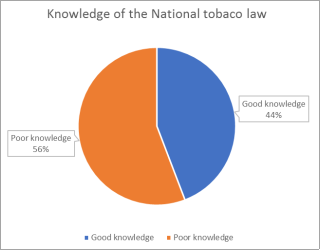
Table 2). Two hundred and eighty-seven (71.9%) of the participants were knowledgeable about the national tobacco law. However, based on the knowledge score which was a combination of two questions, 44.2% of the participants had good knowledge and 55.8% had poor knowledge
Figure 1. Two hundred and eighteen (54.6%) of the participants were exposed to secondhand smoke and one hundred and eighty-one (45.4%) were unexposed. Of those exposed population, 72.8% had a smoker in the household and of those unexposed, 27.2% of them had a smoker in the household. The intensity of secondhand smoke exposure was measured as high, moderate and low based on the number of hours participants were exposed to secondhand smoke viz more than four hours, one to four hours and less than one hour per day, respectively. Of the two hundred and eighteen individuals who were exposed to secondhand smoke, majority of the participants (46.3%) were exposed moderately (one to four hours per day) and approximately 44.5% of the secondhand smoke exposed individuals had high level of exposure. This implies that secondhand smoke exposure when encountered was majorly of moderate to high intensity. Males were more exposed to secondhand smoke than females with 59.1% prevalence in males and 40.9% prevalence in females. Middle-aged participants were most exposed in the population, compared to other age groups, 58.9% in the 30-39-year age group and 65.4% in the 40-49-year age group. Married people were found to be more exposed as well (59.3%), compared with other statuses. However, this may be because in the total population married people were a majority. Participants with primary level of education were most exposed to secondhand smoke (73.3%) compared to the secondary (43.8%) and tertiary (44.4%) levels of education. Individuals who had a smoker in the household were more exposed to secondhand smoke in the motor parks (72.8%), than people who did not have a smoker in their households (49.3%). On the activity in the park, participants were classified into drivers, conductors, traders and passengers and it was found that conductors were the most exposed to secondhand smoke (85.4%) followed by drivers (71.4%), compared to passengers and traders.
The frequency of use of the motor park was also analyzed with secondhand smoke exposure. Frequency of use of the motor park was measured as every day, one to three times a week and less than once a week. It was found that participants who used the park every day were more exposed (68.2%) than participants who used the parks less frequently. Participants who used the motor park less than once a week most unexposed to secondhand smoke. This shows a positive association with use of the motor park and secondhand smoke exposure. Health status was also analyzed with secondhand smoke exposure. It was found that poor health status was positively associated with secondhand smoke exposure, as they were more exposed (70%), than individuals who viewed their health as good or excellent. Knowledge status was not statistically significantly associated with sociodemographic variables. It was however found that participants’ who viewed their health status as excellent had good knowledge of the national tobacco law (53.7%), compared to participants’ who viewed their health as good or poor. Poor health status was associated with poor knowledge status (90%). Middle age (30-49 years), lower than secondary level of education and male sex were positively associated with secondhand smoke exposure. Conductors and drivers and individuals who used the motor parks everyday were more exposed to secondhand smoke and poor perception of individual health status was associated with a higher exposure to secondhand smoke. Individuals who earned less than N10,000 monthly were most exposed to secondhand smoke (54.5%) and those who earned between N100,00 - N150,000 per month were not exposed at all (100%). However, this finding may have been a chance occurrence as income was analyzed to be not associated with secondhand smoke exposure (p-value = 0.129). (
Table 3).
Among the three hundred and ninety-nine respondents, two hundred and eighteen respondents (69.8%), perceived that inhaling smokers’ cigarette smoke can cause serious illness. Participants with tertiary level of education responded to good perception of secondhand smoke exposure risk the most (77.8%), compared to the respondents with secondary, primary and no schooling levels of education (71.5%, 73.1%, 51.9%, respectively). The drivers and conductors had good perception of SHS exposure risks (76.0% and 76.1%, respectively) compared to the traders and passengers (61.7%, 69.1%, respectively). This was found to be contradictory to the prevalence of their exposure as they were more exposed to secondhand smoke. However, respondents who used the motor parks less than once a week, had better perception (83.7%) compared to more frequent users (66.1% for everyday users and 70.6% for one to thrice weekly users). Participants who viewed their health as excellent had better perception of secondhand smoke exposure risks (75.2%) than those who viewed their health being good (66.8%). However, all nine respondents who had poor health status had good perceived risk of secondhand smoke exposure. Participants with primary and secondary education were approximately 60% likely to have good perceived risk of SHS exposure than those without formal education (OR= 0.39 and 0.43 respectively) and participants with tertiary education were 70% more likely to have good perceived risks of SHS exposure (OR=0.31; 95% CI = 0.12 - 0.79). Individuals who had good health status were likely half the time to have good perceived risks of SHS exposure, however this relationship was not statistically significant (OR=1.51; 95% CI= 0.93 - 2.46). Poor knowledge was negatively associated with poor perceived risks of secondhand smoke exposure (p-value = 0.008). Participants who had poor knowledge of the national tobacco law had good perceived risks of second smoke exposure (75.5%) compared to participants with good knowledge of the law, who had poor perceived risks of secondhand smoke exposure (37.0%). The multivariate analysis showed that participants who had good knowledge of the national tobacco law were twice likely to have poor perceived risk of secondhand smoke exposure compared to those with poor knowledge and this negative relationship was statistically significant. (
Table 4)
Figure 1. Knowledge Status of the National Tobacco Law.
Table 1. Socio-Demographic Characteristics of Respondents.
VARIABLES | n (%) | TOTAL (%) |
Sex | | |
Male | 254 (63.7) | |
Female | 145 (36.3) | 399 (100.0) |
Age Range | | |
18-29 years | 98 (25.0) | |
30-39 years | 107 (27.3) | |
40-49 years | 78 (19.9) | |
50-59 years | 67 (17.1) | |
+ 60 years | 42 (10.57) | 392 (100.0) |
Marital status | | |
Single | 98 (24.6) | |
Married | 273 (68.5) | |
Separated | 17 (4.3) | |
Widowed | 11 (2.8) | 399 (100.0) |
Level of education | | |
No formal education | 55 (13.8) | |
Primary education | 105 (26.3) | |
Secondary education | 203 (50.9) | |
Tertiary education | 36 (9.0) | 399 (100.0) |
Occupational status | | |
Employed | 294 (74.8) | |
Student | 48 (12.2) | |
Homemaker | 11 (2.8) | |
Retired | 21 (5.3) | |
Unemployed | 19 (4.8) | 393 (100.0) |
Income, monthly | | |
<N10,000 | 33 (13.5) | |
N10,000 - N50,000 | 177 (72.2) | |
N50,000 - N100,000 | 31 (12.7) | |
N100,000 - N150,000 | 4 (1.6) | 245 (100.0) |
Table 2. Bivariate Analysis of prevAlence of SHS Exposure and Socio-Demographics.
VARIABLE | SHS EXPOSURE | Chi2 | p-value | n (%) |
Exposed (%) | Unexposed (%) |
Sex | | | 5.506 | 0.019 | |
Male | 150 (59.1) | 104 (40.9) | | | |
Female | 68 (46.9) | 77 (53.1) | | | 399 (100.0) |
Age Range | | | 9.568 | 0.048 | |
18-29 | 45 (45.9) | 53 (54.1) | | | |
30-39 | 57.6 (58.9) | 44 (41.1) | | | |
40-49 | 51 (65.4) | 27 (34.6) | | | |
50-59 | 33 (49.3) | 34 (50.7) | | | |
+ 60 | 19 (45.2) | 23 (54.8) | | | 392 (100.0) |
Marital status | | | 9.346 | 0.025 | |
Single | 46 (46.9) | 52 (53.1) | | | |
Married | 162 (59.3) | 111 (40.7) | | | |
Separated | 7 (41.2) | 10 (58.8) | | | |
Widowed | 3 (27.3) | 8 (72.7) | | | 399 (100.0) |
Level of education | | | 28.458 | <0.001 | |
No formal schooling | 36 (65.5) | 19 (34.5) | | | |
Primary | 77 (73.3) | 28 (26.7) | | | |
Secondary | 89 (43.8) | 114 (56.2) | | | |
Tertiary | 16 (44.4) | 20 (55.6) | | | 399 (100.0) |
Occupational status | | | 31.358 | <0.001 | |
Employed | 179 (60.9) | 115 (39.1) | | | |
Student | 14 (29.2) | 34 (70.8) | | | |
Homemaker | 3 (27.3) | 8 (72.7) | | | |
Retired | 5 (23.8) | 16 (76.2) | | | |
Unemployed | 14 (73.7) | 5 (26.3) | | | 393 (100.0) |
Smoker in household | | | 15.725 | <0.001 | |
Yes | 67 (72.8) | 25 (27.2) | | | |
No | 150 (49.3) | 154 (50.7) | | | 396 (100.0) |
Activity in motor park | | | 64.770 | <0.001 | |
Driver | 75 (71.4) | 30 (47.6) | | | |
Conductor | 41 (85.4) | 7 (14.6) | | | |
Trader | 55 (57.9) | 40 (42.1) | | | |
Passenger | 47 (31.3) | 103 (68.7) | | | 399 (100.0) |
Health status | | | 25.092 | <0.001 | |
Poor | 7 (70.0) | 3 (30.0) | | | |
Good | 160 (62.5) | 96 (37.5) | | | |
Excellent | 43 (35.5) | 78 (64.5) | | | 387 (100.0) |
Freq of use of motor park | | | 48.406 | <0.001 | |
Everyday | 152 (68.2) | 71 (31.8) | | | |
1-3 times/week | 41 (37.3) | 69 (62.7) | | | |
<1/week | 12 (24.0) | 38 (76.0) | | | 383 (100.0) |
Monthly income | | | | | |
<N10,000 | 18 (54.5) | 15 (45.5) | 5.663 | 0.129 | |
N10,000 - N50,000 | 94 (53.1) | 83 (46.9) | | | |
N50,000 - N100,000 | 13 (41.9) | 18 (58.1) | | | |
N100,000 - N150,000 | 0 (0.0) | 4 (100.0) | | | 245 (100.0) |
Table 3. Bivariate Analysis of Perceived Risks of Secondhand Exposure and Socio- Demographics.
VARIABLE | PERCEIVED RISKS OF SHS EXPOSURE | Chi2 | P-VALUE | n (%) |
Good perception (%) | Poor perception (%) |
Sex | | | 2.199 | 0.141 | |
Male | 181 (72.4) | 69 (27.6) | | | |
Female | 94 (65.3) | 50 (34.7) | | | 394 (100.0) |
Age range | | | 9.102 | 0.059 | |
18-29 | 62 (63.9) | 35 (36.1) | | | |
30-39 | 67 (63.8) | 38 (36.2) | | | |
40-49 | 57 (73.1) | 21 (26.9) | | | |
50-59 | 49 (74.2) | 17 (25.8) | | | |
+ 60 | 35 (85.4) | 6 (14.6) | | | 387 (100.0) |
Level of Education | | | 10.143 | 0.017 | |
No formal schooling | 28 (51.9) | 26 (48.1) | | | |
Primary | 76 (73.1) | 28 (26.9) | | | |
Secondary | 143 (71.5) | 57 (28.5) | | | |
Tertiary | 28 (77.8) | 8 (22.2) | | | 394 (100.0) |
Health status | | | 6.674 | 0.036 | |
Poor | 9 (100.0) | 0 (0.0) | | | |
Good | 169 (66.8) | 84 (33.2) | | | |
Excellent | 91 (75.2) | 30 (24.8) | | | 385 (100.0) |
Activity at motor park | | | 8.003 | 0.091 | |
Driver | 79 (76.0) | 25 (24.0) | | | |
Conductor | 35 (76.1) | 11 (23.9) | | | |
Trader | 58 (61.7) | 36 (38.3) | | | |
Passenger | 103 (69.1) | 46 (30.9) | | | 394 (100.0) |
Freq of use of motor park | | | 5.955 | 0.051 | |
Everyday | 146 (66.1) | 75 (33.9) | | | |
1-3 times/week | 77 (70.6) | 32 (29.4) | | | |
<1 time/week | 41 (83.7) | 8 (16.3) | | | 379 (100.0) |
Household smoker | | | 2.036 | 0.187 | |
Yes | 68 (76.4) | 21 (23.6) | | | |
No | 207 (68.5) | 95 (31.5) | | | 391 (100.0) |
Statistically significant values are in bold.
Table 4. Multiple Variable Analysis of Sociodemographic Variables and Perceived Risks of Secondhand Exposure.
Variable | Standard Error | Odds Ratio (OrR | (95% CI) |
Level of education | | | |
No formal schooling | | 1.00 | |
Primary | 0.35 | 0.39 | 0.20 - 0.78 |
Secondary | 0.31 | 0.43 | 0.23 - 0.79 |
Tertiary | 0.49 | 0.31 | 0.12 - 0.79 |
Health status | | | |
Poor | | 1.00 | |
Good | 0.25 | 0.00 | 0.00 -. |
Excellent | 0.21 | 1.51 | 0.93 - 2.46 |
Table 5. Multiple Variable Analysis of Perceived Risks of Secondhand Exposure and Knowledge of the National Tobacco Law.
Variable | Perceived Risks of SHS Exposure | Chi2 | p-value | n (%) | OR (95% CI) |
Good perception (%) | Poor perception (%) |
Knowledge status | | | 7.143 | 0.008 | | |
Good knowledge | 109 (63.0) | 64 (37.0) | | | | 1.81 (1.17 - 2.79) |
Poor knowledge | 166 (75.5) | 66.1 (24.5) | | | 393 (100.0) | |
4. Discussion
This study demonstrated that secondhand smoke (SHS) exposure among non-smoking adults in motor parks in Eti-Osa LGA, Lagos, was alarmingly high, with a prevalence of 54.6%. This level of exposure exceeds earlier Nigerian estimates, including 38.3% reported in indoor public places and the lower national figures from the Global Adult Tobacco Survey (GATS)
| [18] | Federal Ministry of Health (Nigeria); World Health Organization; Centers for Disease Control and Prevention. Global Adult Tobacco Survey: Nigeria Country Report 2012. Abuja: FMOH; 2012. https://health.gov.ng/wp-content/uploads/2025/06/Final-NTC-Enforcement-Plan-18-aug-2024.pdf Accessed Novemebr 21, 2025. |
| [19] | Global Adult Tobacco Survey (GATS). Nigeria Country Report 2012. Federal Ministry of Health; 2012.
https://extranet.who.int/ncdsmicrodata/index.php/catalog/250 Accessed Novemeber 21, 2025. |
[18, 19]
. The markedly higher prevalence observed in motor parks may reflect the open-air yet highly permissive nature of these environments, where smoking occurs more freely despite existing legal prohibitions
. Recent evidence from sub-Saharan Africa supports this pattern, with studies showing elevated SHS exposure in public settings, including among adolescents in Abuja and adults in hospitality venues, despite the presence of smoke-free laws
. Sociodemographic patterns in this study showed that males and middle-aged adults were disproportionately exposed, aligning with findings from Fischer and Kraemer
| [21] | Fischer F, Kraemer A. Meta-analysis of the association between second-hand smoke exposure and ischaemic heart disease, COPD and stroke. BMC Public Health. 2015; 15: 1202. https://doi.org/10.1186/s12889-015-2489-4 |
[21]
and more recent analyses reporting similar trends across West African populations
| [22] | Desalu OO, Onyedum CC, Adewole OO, Fawibe AE, Salami AK. Secondhand smoke exposure among nonsmoking adults in two Nigerian cities. Niger J Clin Pract. 2011; 14(3): 292-295. https://doi.org/10.4103/1596-3519.82069 |
[22]
. Low educational attainment was also significantly associated with higher SHS exposure, reinforcing longstanding evidence that individuals with fewer years of schooling are more vulnerable to environmental tobacco smoke and consistent with broader regional findings in sub-Saharan Africa
| [23] | Onyeonoro UU, Chukwuonye II, Madukwe OO, Ukegbu AU. Awareness and perception of harmful effects of smoking in Abia State, Nigeria. Niger J Med. 2015; 24(1): 45-50.
https://doi.org/10.4103/0189-7969.148483 |
[23]
. Frequent motor park users - particularly drivers and conductors - experienced prolonged exposure exceeding four hours daily, highlighting contemporary evidence that there is no safe level of SHS exposure and that even brief exposure can increase cardiovascular risk
| [24] | Okekunle AP, Asowata OJ, Fakunle AG, Akpa OM, Sarfo FS, Akpalu A, et al. Secondhand smoke exposure is independently associated with stroke among non-smoking adults in West Africa: Findings from the SIREN study. J Neurol Sci. 2022; 440: 120489. https://doi.org/10.1016/j.jns.2022.120489 |
| [25] | Mbulo L, Palipudi K, Smith T, Owusu D, Williams F, Dean AK, et al. Secondhand smoke exposure inside the home among adults in eight countries in sub-Saharan Africa: Global Adult Tobacco Survey, 2012-2018. Nicotine Tob Res. 2023; 25(4): 740-748. https://doi.org/10.1093/ntr/ntac247 |
| [26] | U.S. Department of Health and Human Services. There is No Safe Level of Secondhand Smoke. USDHHS; 2010.
https://www.hhs.gov/sites/default/files/secondhand-smoke-consumer.pdf Accessed Nov. 21, 2025. |
[24-26]
.
A noteworthy aspect of this study is that nearly two-thirds of respondents demonstrated good perception of SHS-related health risks, consistent with earlier reports from Nigeria
| [11] | South Africa. Tobacco Products Control Amendment Act, 2008. Government Gazette No. 31705. Pretoria: Government of South Africa; 2008.
https://www.gov.za/sites/default/files/gcis_document/201409/3179023.pdf Accessed Nov. 21, 2025. |
| [18] | Federal Ministry of Health (Nigeria); World Health Organization; Centers for Disease Control and Prevention. Global Adult Tobacco Survey: Nigeria Country Report 2012. Abuja: FMOH; 2012. https://health.gov.ng/wp-content/uploads/2025/06/Final-NTC-Enforcement-Plan-18-aug-2024.pdf Accessed Novemebr 21, 2025. |
[11, 18]
. Education emerged as the only sociodemographic factor significantly associated with better risk perception, echoing findings from Onyeonoro
| [23] | Onyeonoro UU, Chukwuonye II, Madukwe OO, Ukegbu AU. Awareness and perception of harmful effects of smoking in Abia State, Nigeria. Niger J Med. 2015; 24(1): 45-50.
https://doi.org/10.4103/0189-7969.148483 |
[23]
and more recent surveys indicating that higher educational attainment predicts stronger understanding of SHS harms
| [27] | Desalu OO, Olokoba AB, Salawu FK, Danburam A, Agbo J, Abidoye IA, et al. Secondhand smoke exposure and attitudes toward smoke-free legislation among adults in Nigeria. Niger J Clin Pract. 2011; 14(3): 270-275. |
[27]
. However, knowledge of the national tobacco control law was generally poor, and paradoxically, individuals with better knowledge of the law exhibited poorer risk perception. This disconnect may reflect limited public understanding of the law’s health rationale, inadequate communication about its provisions, or weak visible enforcement that undermines public trust in its relevance
| [15] | Sureda X, Fernández E, Martínez-Sánchez JM, Fu M, López MJ, Martínez C, et al. Secondhand smoke in outdoor settings: smokers’ consumption, non-smokers’ perceptions, and attitudes towards smoke-free legislation in Spain. BMJ Open. 2015; 5(4): e007554.
https://doi.org/10.1136/bmjopen-2014-007554 |
[15]
. Similar gaps between legislation and public awareness have been documented in recent African studies, where smoke-free laws exist but enforcement remains inconsistent
| [28] | Egbe CO, Bialous SA, Glantz SA. Framework Convention on Tobacco Control implementation in Nigeria: lessons for low- and middle-income countries. Nicotine Tob Res. 2019; 21(8): 1122-1130. https://doi.org/10.1093/ntr/nty069 |
[28]
. Overall, the findings highlight a concerning mismatch between awareness of SHS risks and recognition of legal protections, pointing to persistent weaknesses in the implementation and enforcement of Nigeria’s smoke-free legislation
| [29] | Udokanma E, Ogamba I, Ilo CI. A health policy analysis of the implementation of the National Tobacco Control Act in Nigeria. Health Policy Plan. 2021; 36(4): 516-524.
https://doi.org/10.1093/heapol/czaa175 |
[29]
.
5. Implications and Recommendations
The study reinforces the urgent public health importance of addressing SHS exposure in outdoor public settings. Motor parks are critical points of exposure for large, diverse populations, yet remain largely overlooked in tobacco control enforcement. Effective implementation of the National Tobacco Control Act in motor parks is essential, and local government authorities should prioritize enforcing smoke-free laws in these high-risk spaces. Health education is equally crucial. Targeted campaigns using social marketing tools - such as posters, billboards, and audio messages within motor parks - can raise awareness about the dangers of SHS exposure and the provisions of the national tobacco law. Particular attention should be directed toward drivers and conductors, who not only experience the highest levels of exposure but also serve as influential role models within the motor park environment. Although designated smoking areas may offer partial protection, long-term strategies should emphasize complete compliance with smoke-free policies. For policymakers, this study provides baseline data to guide tobacco control strategies in Lagos State and across Nigeria. Future research should adopt mixed-method approaches to better examine the sociocultural and structural barriers to compliance with smoke-free laws, thereby generating evidence for context-specific interventions that address both enforcement gaps and community norms surrounding smoking.
6. Conclusion
This study is the first to investigate SHS exposure in motor parks in Lagos State, Nigeria, and it reveals a prevalence higher than previously documented in indoor public settings. The finding of prolonged exposure among everyday users of motor parks—particularly drivers and conductors—combined with poor knowledge of the national tobacco law underscores the need for urgent, targeted interventions. Although higher educational attainment was associated with better perception of SHS-related risks, this awareness did not translate into improved knowledge of or compliance with smoke-free legislation, highlighting a persistent gap between risk perception and regulatory understanding. However, several limitations must be acknowledged. The cross-sectional design limits the ability to infer causality between sociodemographic factors and SHS exposure. Self-reported data may also be subject to recall bias or social desirability bias, particularly regarding knowledge of the tobacco law and perceived risks. Additionally, SHS exposure was measured based on proximity to smokers rather than using objective biomarkers such as cotinine levels or air-quality monitoring, which may have led to underestimation or overestimation of true exposure. The study was conducted in only two motor parks within a single urban LGA, which may limit the generalizability of findings to other parts of Lagos State or Nigeria, where social norms, enforcement practices, and park structures may differ. Despite these limitations, the study provides essential baseline evidence for policymakers and public health practitioners seeking to protect non-smokers from preventable tobacco-related harm. Strengthening enforcement of the National Tobacco Control Act, implementing targeted health education, and increasing community awareness are critical steps toward reducing the substantial health and economic burden associated with secondhand smoke exposure in Nigeria. The findings also highlight the need for future research employing mixed-method approaches and objective exposure assessments to better understand the sociocultural and structural barriers to achieving smoke-free public environments.
7. Ethical Considerations
Ethical approval was obtained from the University of Liverpool (25 January 2017) and the Health Research and Ethics Committee of Lagos University Teaching Hospital (23 December 2016). All procedures performed in this study involving human participants were conducted in accordance with the ethical standards of the institutional and national research committees and with the 1964 Declaration of Helsinki and its later amendments. Written informed consent was obtained from all participants, with assurances of voluntary participation, confidentiality, and the right to withdraw from the study at any time without penalty.
Abbreviations
CI | Confidence Interval |
FCTC | Framework Convention on Tobacco Control |
GATS | Global Adult Tobacco Survey |
IBM | International Business Machines |
LMIC | Low and Middle Income Country |
LGA | Local Government Area |
NCDC | Nigeria Centre for Disease Control |
NURTW | National Union of Road Transport Workers |
NTC | National Tobacco Control |
NTCA | National Tobacco Control Act |
SD | Standard Deviation |
SHS | Secondhand Smoke |
SPSS | Statistical Package for the Social Sciences |
WHO | World Health Organization |
Acknowledgments
The researchers would like to express their sincere gratitude to the Eti-Osa community members and leadership for their cooperation and support throughout this study.
Author Contributions
Ezekiel Evbusogie: Conceptualization, Data curation, Formal Analysis, Funding acquisition, Investigation, Methodology, Project administration, Resources, Software, Supervision, Validation, Visualization, Writing – original draft, Writing – review & editing
Maduafokwa Blossom Adaeze: Data curation, Formal Analysis, Funding acquisition, Methodology, Project administration, Resources, Supervision, Validation, Visualization, Writing – original draft, Writing – review & editing
Abdulkareem Aisha: Data curation, Formal Analysis, Methodology, Project administration, Resources, Software, Supervision, Validation, Visualization, Writing – original draft, Writing – review & editing
Nwohiri Ijeoma Celine: Formal Analysis, Funding acquisition, Investigation, Methodology, Project administration, Resources, Software, Validation, Visualization, Writing – review & editing
Giwa Opeyemi: Formal Analysis, Funding acquisition, Methodology, Project administration, Resources, Software, Validation, Visualization, Writing – original draft, Writing – review & editing
Funding
This was a self-funded study.
Data Availability Statement
The data supporting the findings of this study are available upon reasonable request from the corresponding author.
Declaration of AI-assisted Technologies in the Writing Process.
During the preparation of this work, the authors used OpenAI to assist with grammar correction and to enhance the cohesiveness of the writing. Following the use of this tool, the authors thoroughly reviewed and edited the content as necessary and take full responsibility for the final version of the publication.
Conflicts of Interest
The authors declare no competing interests.
References
| [1] |
Health Risks of Secondhand Smoke | American Cancer Society
https://www.cancer.org/cancer/risk-prevention/tobacco/secondhand-smoke.html
Accessed October 8, 2025.
|
| [2] |
Alberg AJ, Shopland DR, Cummings KM. The 2014 Surgeon General's report: commemorating the 50th anniversary of the 1964 Report of the Advisory Committee to the US Surgeon General and updating the evidence on the health consequences of cigarette smoking. Am J Epidemiol. 2014; 179(4): 403-412.
https://doi.org/10.1093/aje/kwt335
|
| [3] |
Max W, Sung HY, Shi Y. Deaths from secondhand smoke exposure in the United States: economic implications. Am J Public Health. 2012; 102(11): 2173-2180.
https://doi.org/10.2105/AJPH.2012.300805
|
| [4] |
Veeranki SP, John RM, Ibrahim A, Pillendla D, Thrasher JF, Owusu D, et al. Age of smoking initiation among adolescents in Africa. Int J Public Health. 2017; 62(1): 63-72.
https://doi.org/10.1007/s00038-016-0888-7
|
| [5] |
Kaoje AU, Ismaila AM, Sufiyan MB, Raji MO, Ango U, Yusuf AA, et al. Secondhand cigarette smoke exposure pattern, knowledge, attitude and perception of harm among non-smokers in Sokoto Metropolis, Nigeria. J Environ Sci Public Health. 2020; 4(1): 130-142.
https://doi.org/10.26502/jesph.96120130
|
| [6] |
Akanle O, Ebu CE, Lasisi SA. Trajectories of cigarette smoking among commercial bus drivers and university students in Nigeria. IFE Psychol Int J. 2012 Sep; 20(2): 73-85.
https://ttl.run.edu.ng/bib/26170 Accessed October 8, 2025.
|
| [7] |
Secondhand Tobacco Smoke Exposure in Open and Semi-Open Settings: A Systematic Review | Environmental Health Perspectives | Vol. 121, No. 7
https://ehp.niehs.nih.gov/doi/full/10.1289/ehp.1205806
Accessed October 8, 2025.
|
| [8] |
Odigwe C. Smoking in Nigeria: is it time for a rethink? BMJ. 2003; 327(Suppl S2): 0308294.
https://doi.org/10.1136/sbmj.0308294
|
| [9] |
World Health Organization. WHO Framework Convention on Tobacco Control: Parties to the Convention - Nigeria. Geneva: WHO; 2005. https://fctc.who.int/ Accessed November 21, 2025.
|
| [10] |
Health policy analysis of the implementation of the National Tobacco Control Act in Nigeria | Health Policy and Planning | Oxford Academic
https://academic.oup.com/heapol/article/36/4/484/6061426 Accessed October 8, 2025.
|
| [11] |
South Africa. Tobacco Products Control Amendment Act, 2008. Government Gazette No. 31705. Pretoria: Government of South Africa; 2008.
https://www.gov.za/sites/default/files/gcis_document/201409/3179023.pdf
Accessed Nov. 21, 2025.
|
| [12] |
Department of Health. Smoke-free England: The Health Act 2006 (Chapter 28). London: The Stationery Office; 2006. Accessed Nov. 21, 2025
https://www.legislation.gov.uk/ukpga/2006/28/pdfs/ukpga_20060028_en.pdf
|
| [13] |
Kenya Ministry of Health. Tobacco Control Act 2007: Implementation Status Report. Nairobi: Government of Kenya; 2018.
https://www.afro.who.int/sites/default/files/2017-09/Kenya_report_card_0.pdf
Accessed Nov. 21, 2025.
|
| [14] |
Thrasher JF, Boado M, Sebrié EM, Bianco E. Smoke-free policies and the social acceptability of smoking in Uruguay and Mexico: findings from the International Tobacco Control Policy Evaluation Project. Nicotine Tob Res. 2009; 11(6): 591-599.
https://doi.org/10.1093/ntr/ntp039
|
| [15] |
Sureda X, Fernández E, Martínez-Sánchez JM, Fu M, López MJ, Martínez C, et al. Secondhand smoke in outdoor settings: smokers’ consumption, non-smokers’ perceptions, and attitudes towards smoke-free legislation in Spain. BMJ Open. 2015; 5(4): e007554.
https://doi.org/10.1136/bmjopen-2014-007554
|
| [16] |
Kaufman P, Zhang B, Bondy SJ, Klepeis N, Ferrence R. Not just ‘a few wisps’: real-time measurement of tobacco smoke at entrances to office buildings. Tob Control. 2011; 20(3): 212-218. https://doi.org/10.1136/tc.2010.041277
|
| [17] |
National Population Commission (NPC). 2006 National Population and Housing Census: Priority Table Volume I - Population Distribution by Sex, State, LGA and Senatorial District. Abuja: NPC; 2009. https://nationalpopulation.gov.ng Accessed Novemebr 21, 2025.
|
| [18] |
Federal Ministry of Health (Nigeria); World Health Organization; Centers for Disease Control and Prevention. Global Adult Tobacco Survey: Nigeria Country Report 2012. Abuja: FMOH; 2012. https://health.gov.ng/wp-content/uploads/2025/06/Final-NTC-Enforcement-Plan-18-aug-2024.pdf Accessed Novemebr 21, 2025.
|
| [19] |
Global Adult Tobacco Survey (GATS). Nigeria Country Report 2012. Federal Ministry of Health; 2012.
https://extranet.who.int/ncdsmicrodata/index.php/catalog/250
Accessed Novemeber 21, 2025.
|
| [20] |
Lasebikan V, Lasebikan T, Adepoju S. Outdoor smoking in Nigeria: prevalence, correlates and predictors. BMC Public Health. 2019; 19: 1313.
https://doi.org/10.1186/s12889-019-7601-8
|
| [21] |
Fischer F, Kraemer A. Meta-analysis of the association between second-hand smoke exposure and ischaemic heart disease, COPD and stroke. BMC Public Health. 2015; 15: 1202.
https://doi.org/10.1186/s12889-015-2489-4
|
| [22] |
Desalu OO, Onyedum CC, Adewole OO, Fawibe AE, Salami AK. Secondhand smoke exposure among nonsmoking adults in two Nigerian cities. Niger J Clin Pract. 2011; 14(3): 292-295.
https://doi.org/10.4103/1596-3519.82069
|
| [23] |
Onyeonoro UU, Chukwuonye II, Madukwe OO, Ukegbu AU. Awareness and perception of harmful effects of smoking in Abia State, Nigeria. Niger J Med. 2015; 24(1): 45-50.
https://doi.org/10.4103/0189-7969.148483
|
| [24] |
Okekunle AP, Asowata OJ, Fakunle AG, Akpa OM, Sarfo FS, Akpalu A, et al. Secondhand smoke exposure is independently associated with stroke among non-smoking adults in West Africa: Findings from the SIREN study. J Neurol Sci. 2022; 440: 120489.
https://doi.org/10.1016/j.jns.2022.120489
|
| [25] |
Mbulo L, Palipudi K, Smith T, Owusu D, Williams F, Dean AK, et al. Secondhand smoke exposure inside the home among adults in eight countries in sub-Saharan Africa: Global Adult Tobacco Survey, 2012-2018. Nicotine Tob Res. 2023; 25(4): 740-748. https://doi.org/10.1093/ntr/ntac247
|
| [26] |
U.S. Department of Health and Human Services. There is No Safe Level of Secondhand Smoke. USDHHS; 2010.
https://www.hhs.gov/sites/default/files/secondhand-smoke-consumer.pdf
Accessed Nov. 21, 2025.
|
| [27] |
Desalu OO, Olokoba AB, Salawu FK, Danburam A, Agbo J, Abidoye IA, et al. Secondhand smoke exposure and attitudes toward smoke-free legislation among adults in Nigeria. Niger J Clin Pract. 2011; 14(3): 270-275.
|
| [28] |
Egbe CO, Bialous SA, Glantz SA. Framework Convention on Tobacco Control implementation in Nigeria: lessons for low- and middle-income countries. Nicotine Tob Res. 2019; 21(8): 1122-1130.
https://doi.org/10.1093/ntr/nty069
|
| [29] |
Udokanma E, Ogamba I, Ilo CI. A health policy analysis of the implementation of the National Tobacco Control Act in Nigeria. Health Policy Plan. 2021; 36(4): 516-524.
https://doi.org/10.1093/heapol/czaa175
|
Cite This Article
-
APA Style
Evbusogie, E., Adaeze, M. B., Aisha, A., Celine, N. I., Nene, W. B., et al. (2025). Cross-Sectional Study of Secondhand Smoke Exposure and Associated Perceived Risks Among Non-Smoking Adults in Motor Parks in Lagos, Nigeria. Frontiers, 5(4), 193-204. https://doi.org/10.11648/j.frontiers.20250504.15
 Copy
|
Copy
|
 Download
ACS Style
Evbusogie, E.; Adaeze, M. B.; Aisha, A.; Celine, N. I.; Nene, W. B., et al. Cross-Sectional Study of Secondhand Smoke Exposure and Associated Perceived Risks Among Non-Smoking Adults in Motor Parks in Lagos, Nigeria. Frontiers. 2025, 5(4), 193-204. doi: 10.11648/j.frontiers.20250504.15
Copy
|
Download
AMA Style
Evbusogie E, Adaeze MB, Aisha A, Celine NI, Nene WB, et al. Cross-Sectional Study of Secondhand Smoke Exposure and Associated Perceived Risks Among Non-Smoking Adults in Motor Parks in Lagos, Nigeria. Frontiers. 2025;5(4):193-204. doi: 10.11648/j.frontiers.20250504.15
Copy
|
Download
-
@article{10.11648/j.frontiers.20250504.15,
  author = {Ezekiel Evbusogie and Maduafokwa Blossom Adaeze and Abdulkareem Aisha and Nwohiri Ijeoma Celine and Wika-Kobani Barine Nene and Giwa Opeyemi and Ibenye-Ugbala Chioma and Matti Oluwadamilola},
  title = {Cross-Sectional Study of Secondhand Smoke Exposure and Associated Perceived Risks Among Non-Smoking Adults in Motor Parks in Lagos, Nigeria},
  journal = {Frontiers},
  volume = {5},
  number = {4},
  pages = {193-204},
  doi = {10.11648/j.frontiers.20250504.15},
  url = {https://doi.org/10.11648/j.frontiers.20250504.15},
  eprint = {https://article.sciencepublishinggroup.com/pdf/10.11648.j.frontiers.20250504.15},
  abstract = {Secondhand smoke (SHS) exposure remains a critical global health threat, causing an estimated 1.3 million deaths annually and classified by the World Health Organization (WHO) as a Group 1 carcinogen with no safe level of exposure. In Nigeria, SHS contributes substantially to both communicable and non-communicable diseases despite the National Tobacco Control Act (NTCA) of 2015, which incorporates key provisions of the WHO Framework Convention on Tobacco Control (FCTC); however, enforcement gaps and limited public awareness continue to undermine its effectiveness. This study assessed the prevalence of SHS exposure and examined associations between socio-demographic characteristics, knowledge of tobacco legislation, and perceived risks of SHS among 399 non-smoking adults recruited through systematic sampling in Ajah and Obalende motor parks in Eti-Osa LGA, Lagos State. Using a modified Global Adult Tobacco Survey (GATS) questionnaire, data were analyzed with IBM SPSS version 21, employing descriptive statistics, Chi-square tests, and multivariate logistic regression at a significance level of p ≤ 0.05. The prevalence of SHS exposure was 54.6%, notably higher among middle-aged men, individuals with lower educational attainment, and frequent users of motor parks. Although 69.8% of respondents demonstrated good perceived risk of SHS - reflecting awareness of its respiratory, cardiovascular, and carcinogenic harms - knowledge of the NTCA was poor (44.2%), indicating that understanding of health risks has not translated into awareness of legal protections or compliance with smoke-free regulations. These findings underscore the high burden of SHS exposure in outdoor transport settings, exceeding previously reported indoor rates, and highlight the urgent need for strengthened enforcement of smoke-free laws, improved public education on tobacco legislation, and targeted interventions within motor parks to reduce SHS exposure and protect public health.},
 year = {2025}
}
Copy
|
Download
-
TY  - JOUR
T1  - Cross-Sectional Study of Secondhand Smoke Exposure and Associated Perceived Risks Among Non-Smoking Adults in Motor Parks in Lagos, Nigeria
AU  - Ezekiel Evbusogie
AU  - Maduafokwa Blossom Adaeze
AU  - Abdulkareem Aisha
AU  - Nwohiri Ijeoma Celine
AU  - Wika-Kobani Barine Nene
AU  - Giwa Opeyemi
AU  - Ibenye-Ugbala Chioma
AU  - Matti Oluwadamilola
Y1  - 2025/12/17
PY  - 2025
N1  - https://doi.org/10.11648/j.frontiers.20250504.15
DO  - 10.11648/j.frontiers.20250504.15
T2  - Frontiers
JF  - Frontiers
JO  - Frontiers
SP  - 193
EP  - 204
PB  - Science Publishing Group
SN  - 2994-7197
UR  - https://doi.org/10.11648/j.frontiers.20250504.15
AB  - Secondhand smoke (SHS) exposure remains a critical global health threat, causing an estimated 1.3 million deaths annually and classified by the World Health Organization (WHO) as a Group 1 carcinogen with no safe level of exposure. In Nigeria, SHS contributes substantially to both communicable and non-communicable diseases despite the National Tobacco Control Act (NTCA) of 2015, which incorporates key provisions of the WHO Framework Convention on Tobacco Control (FCTC); however, enforcement gaps and limited public awareness continue to undermine its effectiveness. This study assessed the prevalence of SHS exposure and examined associations between socio-demographic characteristics, knowledge of tobacco legislation, and perceived risks of SHS among 399 non-smoking adults recruited through systematic sampling in Ajah and Obalende motor parks in Eti-Osa LGA, Lagos State. Using a modified Global Adult Tobacco Survey (GATS) questionnaire, data were analyzed with IBM SPSS version 21, employing descriptive statistics, Chi-square tests, and multivariate logistic regression at a significance level of p ≤ 0.05. The prevalence of SHS exposure was 54.6%, notably higher among middle-aged men, individuals with lower educational attainment, and frequent users of motor parks. Although 69.8% of respondents demonstrated good perceived risk of SHS - reflecting awareness of its respiratory, cardiovascular, and carcinogenic harms - knowledge of the NTCA was poor (44.2%), indicating that understanding of health risks has not translated into awareness of legal protections or compliance with smoke-free regulations. These findings underscore the high burden of SHS exposure in outdoor transport settings, exceeding previously reported indoor rates, and highlight the urgent need for strengthened enforcement of smoke-free laws, improved public education on tobacco legislation, and targeted interventions within motor parks to reduce SHS exposure and protect public health.
VL  - 5
IS  - 4
ER  -
Copy
|
Download

 ,
Maduafokwa Blossom Adaeze
,
Maduafokwa Blossom Adaeze


 Share This Article
 Twitter
 Linked In
 Facebook